
From the patio to the dock & back again
Thoughtful outdoor lighting brings your gardens, pathways, and gathering spaces into one complete waterfront experience. Step onto your patio after sunset and look toward the dock. What can you see along the way? The garden beside the steps? The path through the trees? Or does everything disappear until you reach the water?
Now picture yourself on the dock, looking back. Your home and landscape become the view, and the lighting decisions look different from down there. That’s where a complete waterfront lighting design begins. Dock lighting on Lake Norman belongs in the same conversation as your home, gardens, pathways, and outdoor gathering areas. Together, they shape how the evening looks and where it takes you.
Begin With Two Views of Your Waterfront Home
Most homeowners have a favorite lake view, whether it’s from the kitchen, an upstairs balcony, or a particular patio chair. We start by understanding those views and how you spend time outdoors. A dock that looks inviting from the house should also feel comfortable when you’re sitting on it.
Looking toward the water, selected trees and garden beds can give the scene depth and connect the terrace to the shoreline. Looking back, architectural lighting can reveal the home’s materials and details, with the landscape providing layers between you and the house.
Our outdoor lighting design process considers both directions. A fixture tucked behind a planting bed may be concealed from the patio but visible from the dock. We account for those changing sightlines when choosing locations and aiming the light.
Connecting Your Patio & Gardens to the Dock
The garden between your home & the lake deserves a place in the evening
A mature tree, textured stone wall, or planting bed beside the terrace can help connect spaces that otherwise feel separated after dark. The key is choosing features that contribute to the whole view. A tree near the path might provide a visual connection toward the shoreline, while lower planting beds help define the patio. From the dock, those same features become the foreground to your home. Their placement matters as much as their brightness.
There’s a seasonal element, too. Growing foliage can interrupt a beam, and bare branches change how light travels through a tree. Periodic adjustments help preserve the design as the garden changes. That’s one reason ongoing landscape lighting maintenance belongs in the long-term plan.
Design Path & Dock Walkway Lighting Around the Walk
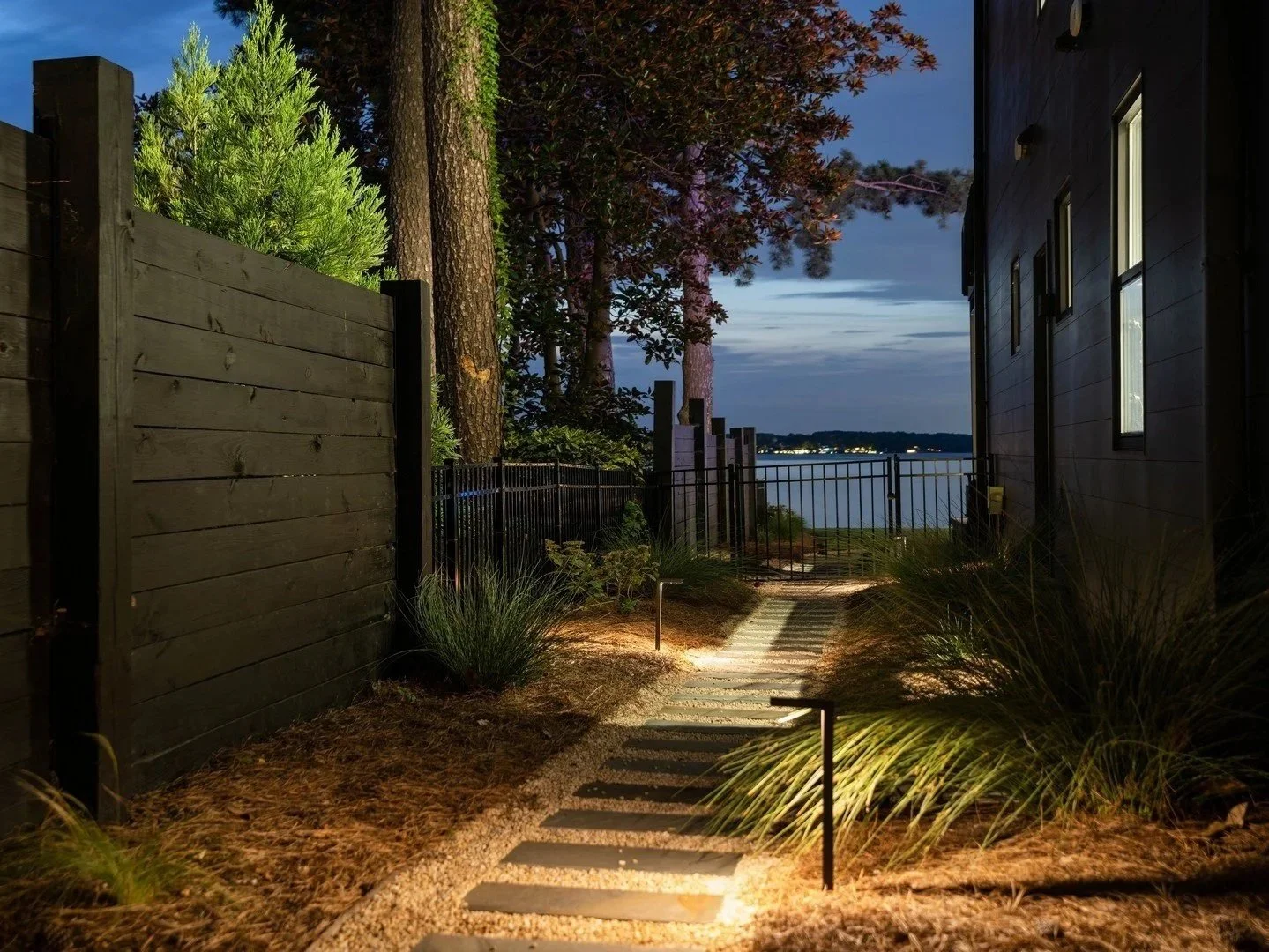
Take the walk you expect your guests to take. There may be patio steps, a winding garden path, a landing halfway down the slope, and a transition onto the dock. Each calls for attention based on its shape, surface, and surroundings.
Path and dock walkway lighting should help people read that route. Placement follows turns, changes in elevation, and transitions between materials. Nearby garden lighting can contribute, but the walking surface still needs deliberate consideration.
Then walk back. A light source hidden on the way down may face you on the return trip. Reviewing both directions helps identify glare and awkward shadows before calling the design finished. Your guests should be thinking about the evening, not conducting a search for the next step.
Make Dock Seating & Pergolas Part of the Evening
The dock often becomes a gathering place once the boat is put away. Covered seating, a pergola, or a bench by the water gives everyone a reason to stay a little longer. Lighting should support conversation and the view from those seats.
We consider where everyone sits, what’s overhead, and how light can reach useful surfaces without shining into their eyes. Concealed lighting beneath a rail or within a covered structure can be appropriate, depending on the dock’s construction. Fixture selection and placement follow the setting.
The same design approach applies to dining terraces and garden seating closer to the home. Coordinated light color helps those spaces feel related, while output can vary with the activity. Dinner on the patio and a conversation beside the lake deserve their own atmosphere. Where separate controls make sense, we can plan around those routines so you can use the areas you need without bringing every part of the yard to the same brightness.
Using Low-Glare Dock Lighting to Keep the Lake in View
Water makes fixture placement especially noticeable because it reflects nearby light
An exposed source can draw your attention from the patio or appear in the water below. Low-glare dock lighting uses shielding, careful aiming, and appropriate output to keep attention on the walkway, structure, and surrounding setting. The review includes the approach, seated positions, and views from the house. You can see this in our Lake Norman dock lighting project, where the walkway and covered gathering area are considered together.
Can dock lighting tie into existing landscape lighting? Yes, it can, and it should. The two areas can be designed to work together visually. Sharing equipment or controls depends on the existing system’s condition, capacity, and layout, so that requires an assessment. Coordinating the design can also mean adjusting older fixtures whose color or brightness clashes with the new work.
Turn Around & See the Complete Waterfront Design
Before heading inside, stop on the dock & look back
The home, garden, terrace, and path should form a balanced scene, with enough definition to understand how the spaces connect. This perspective can reveal an overly bright wall, a seating area that disappears, or a fixture shining toward the shoreline. A nighttime review gives us the opportunity to refine aiming and output from the places you actually use. The review should include sitting down, too. Your eye level changes considerably between walking along the dock and settling into a chair, and a comfortable view needs to account for both. That’s the payoff of designing in both directions: the walk down draws you toward the water, and the view back gives you another reason to appreciate where you live.
Plan Your Lake Norman Dock & Landscape Lighting Together
A complete plan can guide a new installation or improvements made in phases
Understanding the full setting helps each addition support what comes next. For a new dock or landscape renovation, that conversation is especially useful before walkways and finished surfaces limit access. For an existing home, we begin by assessing the lighting already in place and the areas you want to use more often. Light Your Nights brings dock, landscape, and architectural lighting into one design conversation.
📅 Schedule your free lighting design consultation or call 704-560-2948.
Frequently Asked Questions
Can dock lighting tie into my existing landscape lighting?
Yes, dock and landscape lighting can be coordinated visually. Whether they can share equipment or controls depends on the existing system’s condition, capacity, and layout. An assessment determines what can be retained and what needs updating.
Can lighting be added to an existing dock walkway or covered seating area?
An existing dock can be assessed for suitable fixture locations, wiring access, and equipment. Its construction and condition influence the options, so the lighting plan should follow an on-site review.
How do you keep dock lighting from glaring across the water?
Shielded fixtures, careful aiming, and appropriate output help control glare. Reviewing the design from the home, walkway, and dock seating helps identify exposed sources and distracting reflections.