
Landscape Designers: Turn Your Plant Palette into a 24-Hour Masterpiece
Your plant palette should not clock out at sunset
You choose trees, shrubs, grasses, and groundcovers for form, scale, color, texture, and seasonal interest. Every selection has a job. Then evening arrives, and a poorly planned system turns the composition into one dark mass—or blasts it with enough light to interrogate the hydrangeas.
Professional landscape lighting design gives your work a second life after dark. It does not replace your planting plan or compete with it. It translates the same hierarchy, rhythm, and movement into light and shadow. When that translation is handled well, your client experiences the landscape as you intended for far more than the daylight hours.
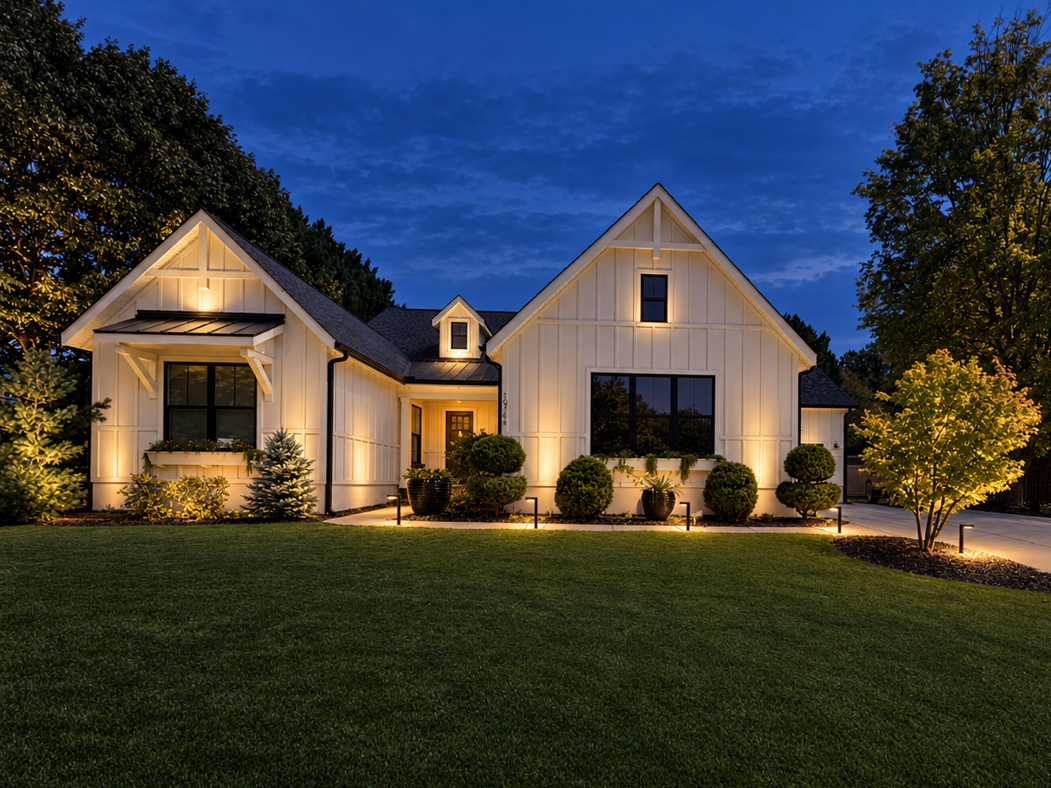
Great Landscape Design Shouldn’t Disappear After Dark
Daylight separates planting layers and reveals changes in grade, texture, and depth. At night, those relationships must be recreated intentionally. Without a clear plan, beds flatten, specimen trees lose their form, and pathways disconnect from garden destinations. Clients may not know why the landscape feels incomplete, but they will notice it.
The best landscape lighting for designers follows the hierarchy already established in the plan. Primary features receive emphasis. Supporting plants are handled with restraint. Darkness separates one scene from the next and gives the eye somewhere to rest. Lighting becomes part of the composition, not a row of fixtures assigned to every plant that held still long enough. That is the goal behind the collaborative lighting design process at Light Your Nights: understand the landscape first, then decide where light belongs.
Match the Lighting Technique to the Plant Material
Specimen Trees & Architectural Branching
The right technique depends on what makes each plant worth seeing. A mature oak, Japanese maple, or multi-stem tree needs more than one bright beam pointed at its trunk. Strategic plant uplighting techniques reveal bark texture, branching patterns, canopy shape, and scale. A narrow beam may suit a tall trunk, while a wider spread can open across a broad canopy. Cross-lighting adds dimension to sculptural forms. Placement must also anticipate growth. A fixture aimed at a young canopy may be swallowed by foliage two seasons later.
Ornamental Grasses & Perennials
Grasses earn their place through movement and fine texture. Backlighting catches leaf edges and seed heads without flooding the bed. A breeze does the rest. Perennials require restraint. Lighting every bloom creates visual noise as the garden changes. Instead, establish the bed’s shape and emphasize a few dependable features.
Shrubs, Hedges & Groundcovers
Shrubs and hedges usually support the composition. Broad, low-intensity light can separate planting layers, define transitions, or reveal a clipped hedge. Groundcovers can connect a path, wall, or stair to the surrounding garden without becoming a focal point. The most effective lighting for trees and plants is selective. Not every plant needs its own moment. Some are there to frame the scene.
Garden Lighting Ideas That Create Composition, Not Clutter
Illuminating everything at the same intensity quickly weakens a strong landscape. When every feature asks for attention, nothing receives it. Start with the hero elements: a specimen tree, a sculpture, or layered planting beyond the patio. Supporting light should guide the eye toward them while preserving contrast.
Some of the most useful garden lighting ideas look beyond the plant itself. Cast a tree’s branching pattern onto a wall. Backlight sculptural foliage. Reflect planting across a pool. Pair soft foliage with textured stone so each makes the other more visible. Interior views matter, too. An illuminated destination beyond the glass extends a room’s perceived depth. Fixture placement must respect those sightlines; a beautiful tree loses some charm when you are staring into the lamp.
Control the Beam, Color & Source
Beam spread determines what the viewer sees. Narrow distributions isolate vertical trunks. Medium beams suit many multi-stem trees, while wider distributions support broad foliage. Several controlled beams often create better dimension than one oversized wash. Thoughtful color temperature for foliage helps plant material appear natural beside stone, wood, and architecture. Warmer light can complement bark and masonry, while a slightly cleaner white may preserve rich green foliage. Kelvin describes the light’s appearance; source quality determines how accurately colors are reproduced.
Then there is glare, the quickest way to make expensive lighting feel careless. Effective glare-free outdoor lighting uses shielding, careful positioning, and precise aiming to keep attention on the effect. Fixtures should recede into mulch, stone, and foliage. Final aiming must happen after dark because it reveals competing beams, missed focal points, unwanted reflections, and visible fixtures. Light Your Nights completes that translation through professional landscape lighting installation and on-site aiming.
Bring Your Lighting Partner In Before the Landscape Is Finished
Coordinate lighting while the landscape plan can still inform fixture locations, wire routes, controls, and access. Waiting until planting and hardscape are finished limits the options. Early review identifies the plants, movement patterns, and views that carry the composition. It also coordinates lighting with irrigation, drainage, root zones, walls, and pathways. That means less trenching and fewer compromises disguised as design decisions.
Light Your Nights can review planting and hardscape plans, identify nighttime focal points, and map fixtures to specific goals. We can join the kickoff meeting, coordinate with the project team, and disappear into the schedule like a well-aimed downlight. You keep control of the vision while a dedicated lighting partner handles technical planning, installation, and after-dark adjustments.
That collaboration is especially valuable for Lake Norman landscape lighting, where waterfront views, mature canopies, outdoor living areas, and reflections must work as one nighttime composition.
Keep the Nighttime Landscape Growing with the Daytime Design
A landscape is never truly finished. Canopies widen, grasses fill in, and pruning changes views. The lighting plan must respond. Periodic aiming keeps beams aligned with changing plant forms. Cleaning restores output, and adjustments prevent foliage from blocking light or exposing the source. New features may require reconsidering the hierarchy instead of adding fixtures. Professional landscape lighting maintenance protects the composition as the garden matures. It keeps the system serving the landscape instead of asking the landscape to work around it.
Frequently Asked Questions About Landscape Lighting for Designers
When should a landscape designer bring in a lighting professional?
Bring in a lighting professional while planting, hardscape, irrigation, and electrical plans can still be coordinated. Early collaboration improves fixture placement, wire routes, access, and hierarchy. It also reduces disruption to finished beds and protects the design intent.
Which plants benefit most from professional landscape lighting?
Specimen trees, ornamental grasses, sculptural shrubs, and plants with strong texture or seasonal structure are natural candidates. The better question is which plants carry the composition. Those features should receive priority while plants frame the view.
How does landscape lighting adapt as plants mature?
Fixtures need cleaning, repositioning, and aiming as trunks expand, canopies widen, and foliage changes. Maintenance keeps beams aligned, controls glare, and preserves the balance between focal points, supporting layers, and darkness.
Ready to Give Your Planting Plan a Second Life After Sunset
Together, we can make the landscape look as intentional at 9 PM as it does at noon.