
Here’s How Landscape Designers Can Shape the Nighttime Experience
Beautiful landscapes don't end at the back door — And they certainly shouldn't end at sunset
A landscape designer considers how people move, where they gather, what catches their attention, and how one outdoor space leads into another. Every pathway, planting bed, and focal point has a purpose. But there's another dimension worth designing for: what happens when daylight disappears?
Thoughtful landscape lighting design brings a different perspective to the outdoor environment. It guides movement, introduces visual interest, and helps people experience a landscape in ways that aren't possible during the day. For landscape professionals throughout Charlotte and Lake Norman, lighting presents an opportunity to extend the experience of their designs well into the evening.
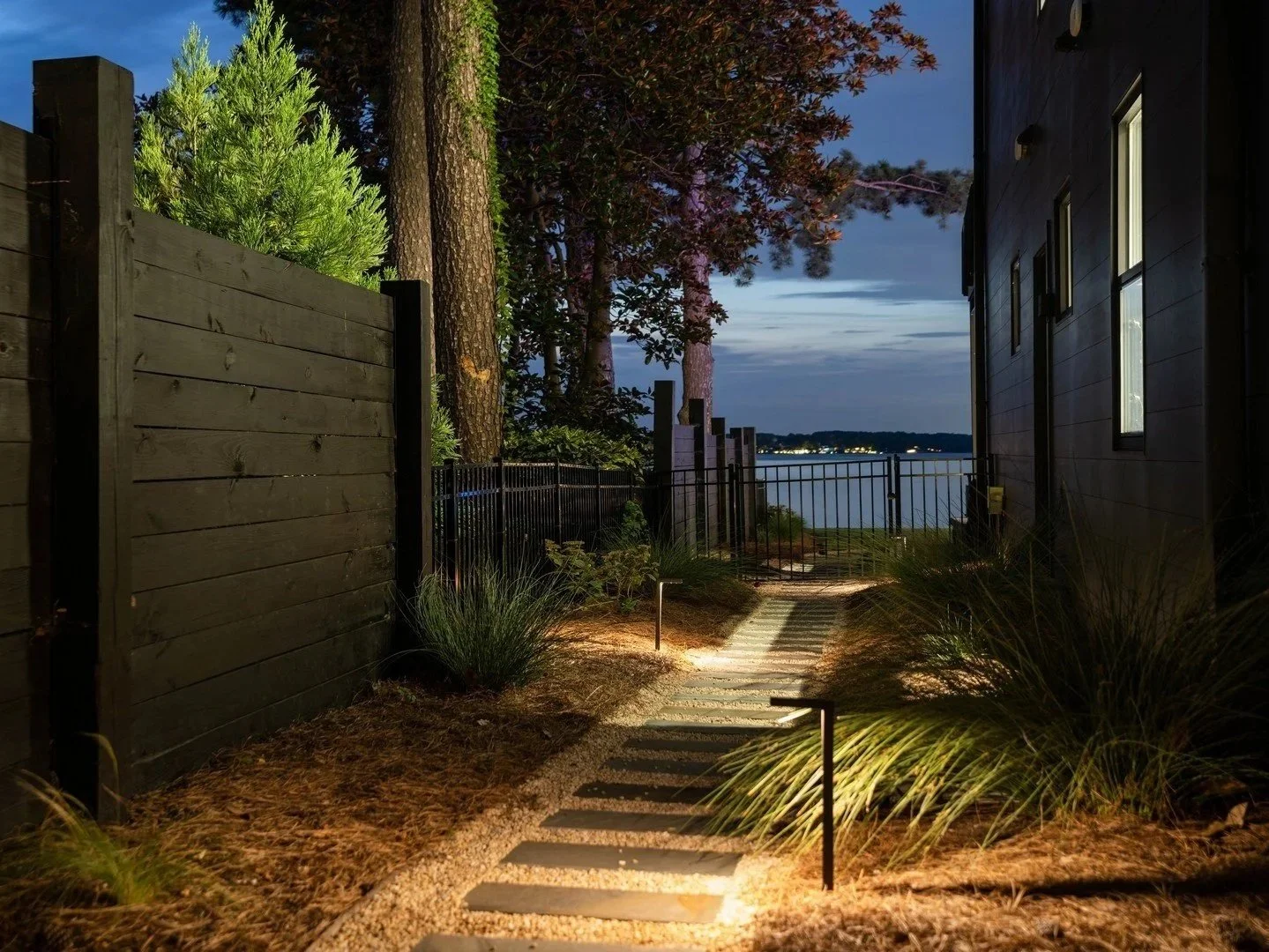
Pathway Lighting Leading to the Waterfront
A Landscape Should Take You Somewhere
Think about the experience of walking through a thoughtfully designed garden
A winding path offers glimpses of what's ahead. A change in elevation creates anticipation. A clearing opens to an unexpected view.
After sunset, those same experiences depend on what people can see and, just as importantly, what remains out of sight.
Professional pathway lighting can establish direction without illuminating every square foot. Carefully spaced fixtures reveal changes in grade, define walking surfaces, and encourage visitors to continue toward the next destination.
In a Lake Norman landscape, that destination might be a waterfront terrace, a secluded seating area, or a garden overlooking the lake. The goal isn't to light everything along the way. It's to make the journey feel natural, comfortable, and inviting.
Give the Eye Something Worth Discovering
Establish a Focal Point, Then Let Everything Else Support It
Landscape designers understand visual hierarchy. A specimen tree, garden sculpture, or distinctive architectural feature often anchors the composition. At night, lighting determines which elements command attention. Imagine a large sculpture positioned among mature trees. During daylight, its form and surrounding plantings share the scene. After sunset, carefully directed illumination can draw attention to its shape while allowing nearby trees to create depth and context.
It's a different way of experiencing the same design.
A skilled lighting designer considers viewing angles, contrast, and the relationship between illuminated elements. Too many competing focal points weaken the experience. A few deliberate choices make each one more meaningful. That's especially important in sophisticated residential landscapes, where restraint often accomplishes more than brightness.
Architectural Landscape Lighting Highlighting Modern Horse Sculpture
Design for the View From Inside, Too
Windows Become Frames After Sunset
Here's something easily overlooked: homeowners experience their landscapes from inside the house just as often as they explore them outdoors. A garden visible through a living room window can become a beautiful evening feature. An illuminated tree beyond a dining terrace adds depth to the view. A carefully highlighted sculpture can create a visual connection between indoor and outdoor living spaces.
Without outdoor lighting, those same windows may offer little more than reflections of the interior.
Effective outdoor lighting for landscape designers considers these important sightlines early in the creative process. What should someone see from the kitchen? Which garden feature deserves attention from the main living area? How will lighting affect the experience from an upstairs bedroom?
These questions help make landscape lighting part of the overall design rather than something added after the installation is complete.
Let Outdoor Spaces Have Different Personalities
A landscape doesn't need one uniform nighttime atmosphere
A dining terrace may benefit from warm, comfortable illumination that encourages conversation. A garden pathway calls for gentle guidance. A wooded area might need only a few carefully chosen accents to reveal interesting forms and create depth. Each space serves a different purpose, and the lighting should reflect that.
Professional landscape lighting design in Charlotte is particularly relevant to homes with expansive outdoor living areas, garden transitions, and wooded settings. Around Lake Norman, thoughtful lighting can also preserve views toward the water while making nearby outdoor spaces more enjoyable. The important consideration is how those individual areas work together. A landscape should feel connected, even when each destination has a character of its own.
The Best Collaborations Respect the Original Design
Landscape architects and designers bring a particular vision to every project
Lighting should strengthen that vision, not compete with it. At Light Your Nights Landscape Lighting, we believe the most productive conversations begin with understanding what the landscape designer is trying to accomplish. Which elements matter most? How should people experience the outdoor spaces? What should attract attention, and what should remain understated?
Our landscape lighting design process starts with those questions, allowing us to develop lighting solutions that complement the existing design. For landscape professionals, that means having a dedicated lighting resource who understands that the best result isn't necessarily the brightest one. It's the one that feels like it belongs.
Give Your Landscape Designs Another Dimension
Great landscape design creates experiences people remember
A beautifully framed view. An inviting path. An unexpected discovery around the next corner. Lighting offers an opportunity to make those experiences just as meaningful after sunset. For landscape architects and designers working throughout Charlotte, Huntersville, Cornelius, Davidson, Mooresville, and Lake Norman, Light Your Nights provides professional landscape lighting installation to complement your creative vision.