
The Landscape Plan Should Not Disappear After Sunset
You’ve spent months shaping the landscape.
The grading directs movement. Trees establish scale. Specimen plantings create focus. Garden beds soften the architecture, and every transition, from the driveway to the back terrace, has been carefully considered.
Then the sun goes down. Without a coordinated lighting design, that carefully planned hierarchy can disappear. Important plantings fall into darkness. Secondary elements compete for attention. Path lights march through beds like runway markers. A mature tree and a three-gallon shrub somehow receive equal billing.
The landscape may be finished, but the nighttime composition is not. Professional landscape lighting should reinforce your design, not redraw it after installation is complete.
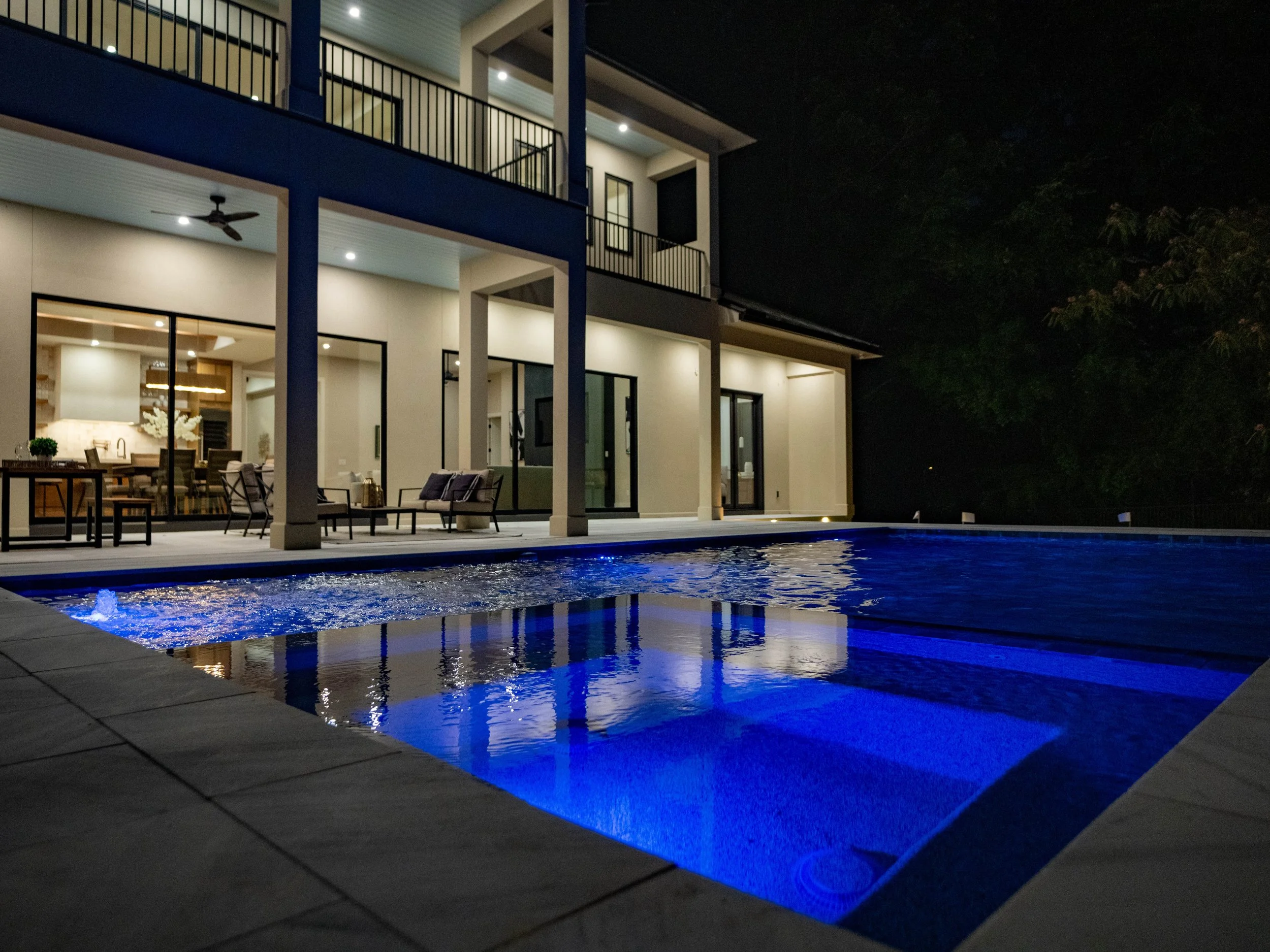
Photo: From this viewpoint, the pool becomes the visual anchor while the covered patio and architecture provide a warm, balanced backdrop. The lighting defines the structure and gathering areas without competing with the water or overwhelming the surrounding darkness.
Your Landscape Already Has a Visual Hierarchy
Every successful landscape directs the eye
Some elements establish structure. Others create rhythm, movement, texture, or contrast. Certain views are meant to hold attention, while supporting plantings provide depth without demanding it.
Lighting should follow the same hierarchy. A specimen tree may deserve controlled uplighting that reveals its branching structure. A layered planting bed may need softer illumination that creates depth without flattening every plant into a single bright mass. A transition between the terrace and lawn may require enough light for safe movement without becoming the most noticeable part of the scene.
This is where professional landscape lighting design becomes part of the broader landscape conversation. The goal is not to light everything evenly. It is to understand what matters, what supports it, and what should remain in the background.
Lighting Can Preserve, or Erase, the Design
Poor lighting does more than make a landscape look too bright or too dark. It changes how the design is understood. A row of evenly spaced fixtures can overpower the natural rhythm of a planting plan. Excessive uplighting can make every tree compete with the architecture. Fixtures placed without considering primary viewpoints can create glare from the patio, driveway, or inside the home. The issue is rarely the quality of an individual fixture. It is the absence of an overall composition.
Good lighting preserves:
Focal points
Planting hierarchy
Depth between the foreground and background
Connections between the architecture and landscape
Clear transitions between outdoor rooms
Important views from inside the home
Areas of darkness that give illuminated elements definition
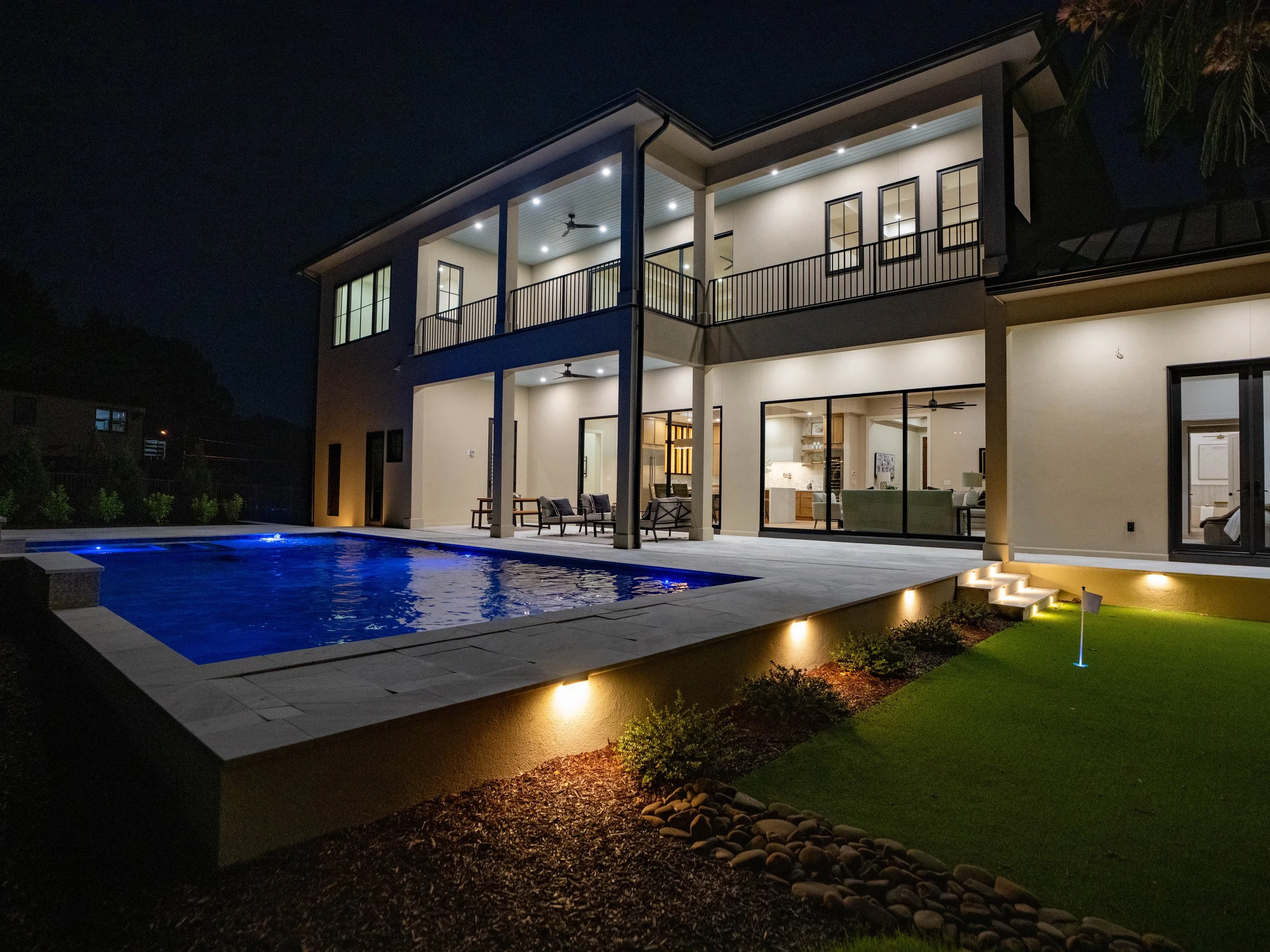
A completed LYN project demonstrates how restraint, selective tree lighting, and controlled architectural illumination can bring a home and landscape into focus without visual clutter. You can see this approach in How Professional Lighting Design Brings a Property Into Focus.
The Best Time to Discuss Lighting Is Before Planting Is Complete
Lighting is often introduced after the landscape has been installed. At that point, the team may already be working around mature plant material, irrigation, drainage, finished beds, hardscape edges, and newly established lawn areas. The lighting can still be designed, but the available options may be narrower than they were several weeks earlier. Early collaboration gives everyone more room to think.
A lighting conversation during the design phase can help identify:
The plantings intended to carry the nighttime composition
Trees that may benefit from canopy or trunk lighting
Views that matter from the home, terrace, pool, or driveway
Areas where fixtures can remain concealed
Likely wiring routes
Outdoor rooms that need separate lighting zones
Installation timing that reduces disruption to completed work
Light Your Nights doesn’t need to take over the landscape plan. We need to understand it. Our role is to interpret how the landscape should read after dark and develop a lighting design that supports the work already underway.
Plan for What the Landscape Will Become
A landscape does not stop changing when the installation crew leaves
Trees mature. Shrubs widen. Groundcover fills in. Canopies become denser, and seasonal growth changes how light moves through the landscape. A fixture positioned only for installation day may be blocked, buried, or visually misplaced several seasons later.
Lighting design should account for that growth. This may mean leaving room around developing plant material, choosing an angle that can be adjusted over time, or avoiding a fixture position that works only while the planting is young. It also means recognizing that some areas will require refinement as the landscape matures. Ongoing adjustment is not evidence that the original design failed. It is part of working with living material. Landscape architects and designers already think several years ahead. The lighting should do the same.
Not Every Tree Needs the Same Treatment
Tree lighting is one of the easiest ways to add scale and depth to a landscape. It is also one of the easiest techniques to overuse. A mature oak, an ornamental tree, and a dense evergreen serve different visual purposes. Giving each the same beam spread, intensity, and fixture position ignores those differences.
Before lighting a tree, we consider what makes it worth seeing:
Its branching structure
The shape of its canopy
Bark texture
Seasonal foliage
Its relationship to the architecture
Its position within a larger grouping
The shadow patterns it can create
Sometimes the trunk is the story. Sometimes the canopy matters more. Sometimes the tree should remain dark so another feature has room to lead. Knowing where not to add a fixture is part of the design.
Views From Inside the Home Matter
Outdoor lighting is not experienced only while someone is walking through the landscape
For much of the evening, the homeowner may view the landscape through windows, glass doors, or from a covered terrace. These interior viewpoints can be just as important as the view from the walkway. A fixture that appears perfectly concealed from the planting bed may create glare when seen from the living room. A brightly illuminated tree may compete with the view beyond it. A dark foreground can turn a large window into a black surface after sunset. Coordinating lighting around these sightlines helps the landscape remain visually connected to the home. The result should feel intentional from both sides of the glass.
Darkness Is Part of the Composition
Landscape lighting is not a campaign against darkness
Darkness creates contrast. It separates visual layers, gives the eye a place to rest, and allows selected elements to carry more weight. When every planting, wall, path, and tree is illuminated, the landscape loses its hierarchy. Nothing feels important because everything is asking for attention. A more restrained design creates greater depth and a clearer point of view.
That may mean leaving part of a garden bed unlit. It may mean using one carefully aimed fixture instead of three. It may mean allowing the edge of the landscape to recede naturally rather than outlining the entire perimeter. The best nighttime designs don’t reveal everything at once. They give the landscape structure while preserving enough shadow for it to remain a landscape.
Coordination Helps Protect Completed Work
Landscape installation involves more than plant material. Irrigation, drainage, grading, soil preparation, edging, masonry, and finished lawn areas all influence how and when lighting should be installed. Bringing the lighting team into the conversation earlier can help reduce unnecessary disturbance once those systems and surfaces are complete.
Depending on the project, Light Your Nights can:
Coordinate directly with the landscape professional or larger project team
Work separately with the homeowner
Review the site before final fixture placement
Discuss installation sequencing
Identify important viewpoints and focal points
Plan lighting zones and controls
Install, aim, and adjust the completed system
Ourlandscape lighting installation process is built around careful placement and professional-grade components, but good installation begins with a design that respects the broader project. A clean installation should not come at the expense of the landscape it is meant to support.
Better Lighting Gives Your Work a Second Life After Dark
Your clients didn’t invest in a landscape that can be appreciated only the day. A coordinated lighting design extends the visual life of the project. It allows the planting structure, outdoor rooms, pathways, and architectural relationships to remain legible well into the evening.
It can also give your completed work an entirely different portfolio presence. Daytime photography shows color, form, texture, and planting detail. Nighttime photography can reveal mood, hierarchy, movement, and the relationship between the landscape and the home. The two do not compete. Together, they tell a more complete story.
A Lighting Partner, Not Another Design Voice Competing for the Project
Professional collaboration works best when each discipline understands its role. The landscape architect or designer establishes the broader outdoor vision. Light Your Nights brings expertise in interpreting that vision after dark through fixture selection, placement, beam control, zoning, and final aiming.
We’re not There to light everything we can find
We are there to ask better questions:
What should the eye notice first?
Which planting establishes the scale of the space?
Where does the landscape need depth?
Which views matter most from inside the home?
Where should the lighting stop?
That is how the landscape plan remains recognizable after sunset.
Collaborating Across Lake Norman
Light Your Nights works with homeowners and project professionals throughout the Lake Norman area. Each project brings a different combination of architecture, plant material, terrain, outdoor living spaces, and waterfront conditions. The lighting design should respond to those conditions rather than impose the same formula on every home. Our broader Professional Collaboration approach is designed to help our architects, builders, landscape professionals, and other project partners bring lighting into the conversation before final decisions have already been made.
Bring Light Your Nights Into the Landscape Conversation
Lighting design should Never begin with a product list
It should begin with an understanding of the landscape, the home, the client, and how the completed environment is meant to feel after dark. Light Your Nights can coordinate directly with your team or work separately with your client while respecting the intent of your design. Contact Light Your Nights to discuss an upcoming project in Lake Norman, Cornelius, Davidson, Huntersville, Mooresville, or the greater Charlotte area.
Ready to discuss an upcoming project?
Let’s make sure your landscape still looks like your landscape after sunset.